Inca Timeline: Rise & Fall of the Inca Empire
Updated Date:
Author: HowToPeru Editorial Team
From its early roots around Cusco to its rapid expansion across the Andes and its final resistance at Vilcabamba, the Inca timeline covers one of the most dramatic periods in South American history.
Exact dates from the early Inca period are not always certain. Much of the chronology was reconstructed from archaeology and accounts written after the Spanish arrival, so some events and reigns are given as approximate dates.
For a wider global perspective, read this timeline alongside The World at the Height of the Inca Empire.
Quick Summary: The Inca timeline begins with early Inca communities developing around Cusco between roughly the 12th and 13th centuries. The Inca Empire, or Tawantinsuyu, expanded rapidly under Pachacuti from around 1438 and became the largest empire in pre-Columbian America before civil war, epidemic disease and the Spanish invasion shattered its central power after 1532. Independent Inca resistance continued from Vilcabamba until 1572, when the Spanish captured and executed Túpac Amaru.
Inca Timeline: Key Dates at a Glance
If you only want the most important dates in the Inca timeline, these are the major turning points:
- c. 1100–1200: Early Inca groups become established in the Cusco Valley.
- c. 1200: Manco Capac is traditionally associated with the founding of the Inca dynasty and Kingdom of Cusco.
- 1438: Pachacuti defeats the Chanca and begins the major expansion of Inca power.
- c. 1450: Machu Picchu is built during the reign of Pachacuti.
- c. 1470: The Incas conquer the powerful Chimú kingdom on Peru’s north coast.
- 1471: Túpac Inca Yupanqui succeeds Pachacuti and continues expanding the empire.
- 1493: Huayna Capac becomes Sapa Inca.
- c. 1525–1527: Huayna Capac dies during a major epidemic, creating a succession crisis.
- 1526–1532: Huáscar and Atahualpa fight for control in the Inca Civil War.
- November 16, 1532: Francisco Pizarro’s forces capture Atahualpa at Cajamarca.
- July 26, 1533: The Spanish execute Atahualpa.
- November 1533: Spanish forces enter Cusco.
- 1536–1537: Manco Inca leads a major rebellion and siege of Cusco.
- 1537: Manco Inca withdraws to Vilcabamba, which becomes the center of an independent Neo-Inca state.
- 1572: Vilcabamba falls and Túpac Amaru, its final ruler, is executed in Cusco.
Inca Empire Timeline: Rise, Expansion and Fall
The Inca Empire did not suddenly appear as a huge state. For generations, the Incas controlled a relatively small territory around Cusco before becoming an expansionist power during the 15th century.
The timeline below follows that development from the pre-imperial Cusco period through Pachacuti’s expansion, the Inca Civil War, the Spanish conquest and the final fall of Vilcabamba.
Emergence of the Incas: Before 1438
- 900 to 1200 AD: The Killke culture flourishes in the Cusco region before the rise of the Incas. Archaeological evidence shows significant Killke occupation and construction around Sacsayhuamán, although the site’s monumental Inca walls belong to a later period.
- c. 1100 to 1200: Early Inca groups become established in the Cusco Valley. The exact origins of the Incas are difficult to date because later Inca traditions blend history with origin legends.
-
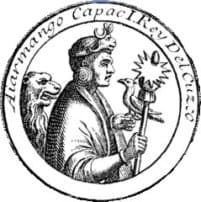
Manco Capac
c. 1200: Manco Capac is traditionally regarded as the founder of the Inca dynasty and the early Kingdom of Cusco. Archaeological chronologies commonly place the emergence of the early Inca state around this general period, although Manco Capac himself is partly a legendary figure.
- 1200 to early 1400s: For roughly two centuries, Inca power remains centered on Cusco and its surrounding valleys. The Incas gradually strengthen their regional position but have not yet created the huge Andean empire associated with their later history.
Pachacuti and the Beginning of the Inca Empire
- 1438: Traditional Inca chronologies place a decisive conflict with the Chanca around this year. Pachacuti Inca Yupanqui emerges as the central Inca leader and defeats the Chanca threat to Cusco. Historians differ over some details of the battle and the actions of the previous ruler, Viracocha Inca, but 1438 is widely used as the major turning point in the rise of the Inca Empire.
-
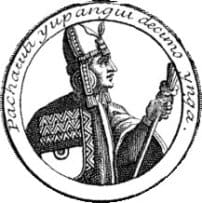
Pachacuti Inca Yupanqui
1438 to 1471: Pachacuti becomes Sapa Inca and transforms a regional kingdom into an imperial state. He reorganizes Cusco and expands Inca control across much of the central Andes. The empire becomes known as Tawantinsuyu, commonly translated as the “Land of the Four Quarters” or “Four Parts Together.”
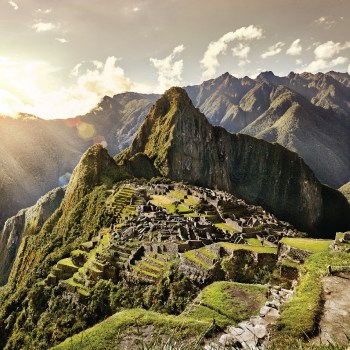
- c. 1450: Machu Picchu is built during Pachacuti’s reign. It is widely interpreted as a royal estate connected with Pachacuti and his lineage rather than as a large permanent city.
- c. 1463: Pachacuti places his son Túpac Inca Yupanqui, also known as Topa Inca, in command of major military campaigns. Inca armies expand northward and absorb large areas of the Andes.
- c. 1470: Inca forces conquer the Chimú kingdom and its capital, Chan Chan, one of the most powerful states on the pre-Inca Peruvian coast. The conquest gives the Incas control over important northern coastal territories and skilled craft specialists.
Túpac Inca Yupanqui and Further Expansion
- 1471: Pachacuti steps down and Túpac Inca Yupanqui succeeds him as Sapa Inca.
- 1471 to 1493: Túpac Inca continues the empire’s aggressive expansion. Inca control extends farther through present-day Peru and into areas of modern Ecuador, Bolivia, Chile and Argentina.
- 1493: Túpac Inca dies and his son Huayna Capac becomes Sapa Inca.
Huayna Capac and the Inca Empire at Its Height
- 1493 to c. 1525–1527: Huayna Capac consolidates and extends Inca authority, particularly in the northern part of the empire. During this period, Tawantinsuyu stretches along much of western South America, from areas of present-day Ecuador and southern Colombia through Peru and Bolivia into parts of Chile and Argentina.
- Early 1500s: Roads, administrative centers, agricultural systems and military installations help connect an enormous and geographically diverse empire back to Cusco.
- c. 1525–1527: Huayna Capac dies during an epidemic that spreads through the Andes. The disease is often identified as smallpox, although historians cannot identify it with complete certainty from the surviving accounts. His intended heir, Ninan Cuyochi, also dies around this period, creating a serious succession crisis.
Inca Civil War: Huáscar vs Atahualpa
- c. 1526 to 1532: A struggle for power develops between Huayna Capac’s sons Huáscar and Atahualpa. Huáscar controls Cusco while Atahualpa builds his power in the northern part of the empire.
- 1529 to 1532: The succession struggle develops into a full civil war. The fighting badly divides the empire just as a new threat is approaching from the Pacific coast.
- 1532: Atahualpa’s forces defeat those loyal to Huáscar, including a decisive victory near Cusco. Atahualpa emerges victorious from the civil war but has little time to consolidate control of the empire.
Spanish Arrival and the Capture of Atahualpa
- 1526 to 1527: During Francisco Pizarro’s earlier exploratory expeditions down the Pacific coast, Spanish expeditions reach areas associated with the Inca realm, including Tumbes in northern Peru.
- 1529: The Spanish Crown formally authorizes Pizarro to continue the conquest and colonization of territory in Peru.
-
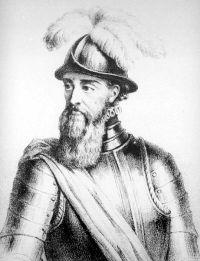
Francisco Pizarro, Conquistador
1531 to 1532: Pizarro’s conquest expedition reaches northern Peru with a relatively small Spanish force. The conquistadors enter an empire already badly divided by civil war.
- November 16, 1532: Pizarro and his forces capture Atahualpa at Cajamarca. Thousands of Atahualpa’s followers are attacked in the encounter while the Sapa Inca himself is taken prisoner.
- 1532 to 1533: Atahualpa remains a captive in Cajamarca while an enormous ransom of gold and silver is gathered. Despite the payment, the Spaniards do not release him.
- July 26, 1533: The Spaniards execute Atahualpa in Cajamarca. Túpac Huallpa is briefly installed as a successor but dies soon afterward.
- November 15, 1533: Spanish forces enter Cusco. Manco Inca Yupanqui, another son of Huayna Capac, is subsequently installed as a ruler allied with the Spaniards.
Manco Inca and the Rebellion Against the Spanish
- January 18, 1535: Francisco Pizarro founds Lima on Peru’s central coast as Ciudad de los Reyes, or “City of Kings.” The new settlement becomes the main Spanish political center rather than the former Inca capital of Cusco.
- 1536 to 1537: Manco Inca turns against the Spaniards and launches a major rebellion. Inca forces surround Cusco in a prolonged siege and also fight the Spanish at Ollantaytambo.
- 1537: Unable to retake Cusco permanently, Manco Inca withdraws toward the remote Vilcabamba region. From there, he establishes an independent Inca state that survives for several more decades.
Vilcabamba and the Last Inca Rulers
- 1537 to 1544: Manco Inca rules from Vilcabamba and continues resistance against Spanish control.
- 1544: Manco Inca is murdered by a group of Spaniards who had previously been given refuge at Vilcabamba. His death does not end the independent Inca state. Vilcabamba continues under later rulers including Sayri Túpac, Titu Cusi Yupanqui and Túpac Amaru.
-

The execution of Túpac Amaru
1572: Viceroy Francisco de Toledo orders a military campaign against Vilcabamba. Spanish forces capture the independent Inca capital and take its final ruler, Túpac Amaru, prisoner.
- 1572: Túpac Amaru is brought to Cusco and publicly executed. His death marks the end of the independent Neo-Inca state at Vilcabamba and the final major political continuation of Inca royal rule.
How Long Did the Inca Empire Last?
The answer depends on what is meant by the “Inca Empire.”
Inca communities and rulers existed around Cusco for centuries before the imperial expansion. However, the powerful expansionist state usually identified as the Inca Empire or Tawantinsuyu developed rapidly from around 1438 under Pachacuti.
Spanish forces captured Atahualpa in 1532 and occupied Cusco in 1533, meaning the empire at its height lasted for less than a century.
But Inca political resistance did not end in 1533. An independent Inca state survived at Vilcabamba until 1572, almost four decades after the Spanish occupation of Cusco.
Why Did the Inca Empire Fall So Quickly?
There was no single cause.
The death of Huayna Capac and his successor during an epidemic created a dangerous succession crisis. The resulting civil war between Huáscar and Atahualpa divided armies, regional elites and political loyalties across Tawantinsuyu.
Pizarro then arrived at an unusually vulnerable moment. The Spaniards had horses, steel weapons and unfamiliar military tactics, but they also relied heavily on Indigenous groups that opposed Inca rule or sided with the invaders.
Capturing Atahualpa at Cajamarca gave the Spanish enormous political leverage. Even after Cusco fell, however, Inca forces continued to resist Spanish rule for decades.
Frequently Asked Questions About the Inca Timeline
When did the Inca Empire begin?
The Inca people were established around Cusco centuries earlier, but the expansionist Inca Empire is generally dated from around 1438, when Pachacuti rose to power and began transforming the Kingdom of Cusco into Tawantinsuyu.
When did the Inca Empire end?
Spanish forces captured Atahualpa in 1532 and occupied Cusco in 1533, ending the Inca Empire as the dominant Andean state. An independent Inca state continued at Vilcabamba until 1572.
How long did the Inca Empire last?
If the imperial period is dated from Pachacuti’s rise around 1438 to the Spanish occupation of Cusco in 1533, the Inca Empire at its height lasted for roughly 95 years. Independent Inca rule survived at Vilcabamba until 1572.
Who founded the Inca Empire?
Manco Capac is traditionally described as the founder of the Inca dynasty and early Kingdom of Cusco. Pachacuti, however, is usually considered the ruler who created the large expansionist Inca Empire beginning around 1438.
When was Machu Picchu built?
Machu Picchu was built during the 15th century, most likely around 1450 during the reign of Pachacuti. It is widely interpreted as a royal estate associated with Pachacuti and his lineage.
What was the Inca Empire called?
The Incas called their empire Tawantinsuyu, commonly translated as the “Land of the Four Quarters” or “Four Parts Together.” It was organized around four major regions extending outward from Cusco.
What caused the fall of the Inca Empire?
The collapse resulted from several overlapping factors: epidemic disease, a succession crisis, the civil war between Huáscar and Atahualpa, the capture of Atahualpa, Spanish military intervention and alliances between the Spaniards and Indigenous groups opposed to Inca control.
Who was the last Inca ruler?
Atahualpa was the last independent Sapa Inca to rule the main empire before his capture in 1532. Túpac Amaru was the final ruler of the independent Inca state at Vilcabamba and was executed by the Spanish in 1572.
When did the Spanish conquer the Incas?
The Spanish conquest was a process rather than a single event. Atahualpa was captured in 1532, Cusco was occupied in 1533, Manco Inca launched a major rebellion in 1536, and the last independent Inca state at Vilcabamba fell in 1572.