
Updated Date:
Author: HowToPeru Editorial Team
Most travelers go from Puno to La Paz on the Copacabana route. It crosses the border at Kasani and includes a short boat ride across the Strait of Tiquina. Allow around 7 to 8 hours in total, or longer if you stop in Copacabana. The challenge is fitting an international border, a lake crossing and arrival in a new country into one day. Peru Hop and its sister brand Bolivia Hop make that simple. You get hotel pickup in Puno, a bilingual host at the border and the option to stop in Copacabana.
| What to know | Details |
|---|---|
| Distance | About 265 km on the direct road, or around 286 km via Copacabana |
| Total travel time | Around 7 to 8 hours via Copacabana; 5 to 7 hours via Desaguadero, depending on border queues |
| Border crossings | Kasani, near Yunguyo and Copacabana, or Desaguadero |
| Kasani opening hours | About 07:30 to 18:00 Peru time (08:30 to 19:00 Bolivia time) |
| Time difference | Bolivia is one hour ahead of Peru |
| Currency | Bolivian bolivianos (BOB) once you cross |
| Lake crossing | Strait of Tiquina, on the Copacabana route only |
Border hours and times can change, so confirm your exact departure with the operator before you travel.
Every bus from Puno to La Paz uses one of two border crossings. The choice shapes your whole day.
This route follows the shore of Lake Titicaca to the Kasani border post near Yunguyo. After the border, it continues a few kilometers to Copacabana, then on to La Paz across the Strait of Tiquina.
It takes longer, but it is the crossing most international travelers use. Border queues here usually run from 20 minutes to an hour. The lake views are superb, and you can break the trip in Copacabana for Isla del Sol.
The Desaguadero crossing sits on the main highway between Puno and La Paz. It is shorter on paper and skips the lake crossing, which is why many public buses use it.
However, it is a busy freight border with long lines of trucks. Queues can take anywhere from 30 minutes to 2 hours, and there is nothing worth stopping for along the way.
| Route | Typical border wait | Highlights | Best for |
|---|---|---|---|
| Kasani and Copacabana | 20 to 60 minutes | Lake views, Copacabana, Isla del Sol, Tiquina crossing | First-time visitors and anyone who wants to see the lake |
| Desaguadero | 30 minutes to 2 hours | None worth stopping for | Travelers in a hurry who are confident handling the border alone |
On the Copacabana route, the crossing at Kasani follows the same steps every day:
Entry rules for Bolivia depend on your nationality and can change. Check the current requirements for your passport before you travel, rather than relying on older blogs or forums.
On a hosted service, the onboard host explains each step and waits with the group. Immigration decisions still rest with the border authorities. Even so, a guide makes a first South American land crossing far less stressful.
Between Copacabana and La Paz, the road reaches the Strait of Tiquina, a narrow stretch of Lake Titicaca about 800 m wide. There is no bridge.
The bus crosses on a wooden barge, while passengers ride across separately in a small motorboat. The boat costs around 2 bolivianos per person, so keep some small coins handy.
Because of the barge’s weight limits, buses on this stretch tend to be smaller, and many have no onboard toilet. Use the facilities at the docks, which also charge a small fee.
If you have the time, yes. Copacabana is a relaxed lakeside town and the jumping-off point for Isla del Sol. The island is one of the best stops on the whole Peru-to-Bolivia route.
A flexible pass makes this easy, because you do not need to finish the route on one ticket and one date. For the first leg on its own, see our Puno to Copacabana bus guide.
Peru Hop runs this route together with its sister brand Bolivia Hop. On a day that combines a border, a lake crossing and a new country, the support makes a real difference.
You can see the combined route on the Puno to Copacabana to La Paz pass.
Inka Express also lists daily departures from Puno to La Paz, leaving from the public terminal in Puno. It is a premium tourist bus company with high-speed WiFi and excellent customer service. It has operated since 1999 and holds about 4.4 out of 5 across roughly 500 TripAdvisor reviews. Check the route and border it uses when you book.
Public buses also run between Puno and La Paz, but they leave travelers to manage most of the day on their own.
With public buses, the base ticket is not the full cost. Terminal taxis on both sides of the border, check-in time and separate boat trips can push the total higher.
These departures were last listed on this page. Schedules change, so confirm current times directly with the operator before you travel.
| Company | Schedule | Departure time | Departure point | English-speaking assistance | TripAdvisor rating |
|---|---|---|---|---|---|
| Peru Hop | Daily | 08:30 | Hotel pickup and drop-off | Yes | 98% |
| Inka Express | Daily | 06:00, 07:30 and 14:00 | Public terminal | No | 89% |
Keep your passport, money and electronics with you at all times, especially at the border and the Tiquina docks. Cross during daylight if you can, since border posts and onward transport are easier to manage while everything is open.
On the Peruvian side, long-distance buses are monitored by SUTRAN, Peru’s highway transport regulator.
The final stretch climbs to El Alto, above 4,100 m, before dropping into the bowl of La Paz. Traffic on the way into the city can be slow, so treat your arrival time as an estimate.
Public buses finish at a bus terminal, and you will need a taxi from there. Hosted services such as Bolivia Hop drop travelers off in the city, so check your exact drop-off point when you book. If you can, keep your first evening free in case the border or the lake crossing runs late.
Continuing around Bolivia? Bolivia Hop connects La Paz with other stops on its network. Heading back toward Peru later? See our La Paz to Puno bus guide.
Traveler reviews of the Peru-Bolivia route often mention the convenience of having transport organized across several destinations. One traveler reviewed the La Paz, Copacabana, Puno and Arequipa route. They described the buses as clean and modern and praised the punctual service. You can read the original review on Trustpilot.
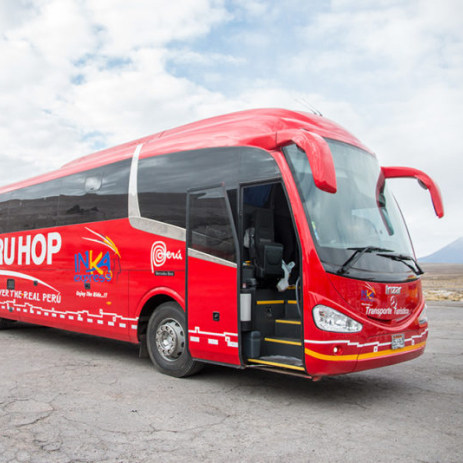
Pros:
Cons:
A unique bus service in Peru which started in October 2013 and has quickly become a traveler favorite with over 15,500 excellent reviews on their Tripadvisor page, which is quite impressive. Being the first and only hop-on, hop-off bus system in Peru, the company covers the Puno to La Paz. It offers a variety of flexible bus passes, in which you can stay however long you want in any of the destinations, letting you enjoy travel at your own pace. Apart from this, there’s onboard bilingual assistance on all their busses, as well as discounts on accommodation and restaurants in all the destinations.
They pick-up passengers at hotels and hostels in all destinations which is a huge bonus here in Peru (no getting unsafe taxis or going to dangerous bus terminals) and from there take the safer route through the south of Peru. Definitely a service that is recommended for people wanting to travel safely and discover Peru!
We strongly suggest traveling with Peru Hop through Peru. Their unique hop on hop off service is one of a kind in South America and allows you to always travel like a local.
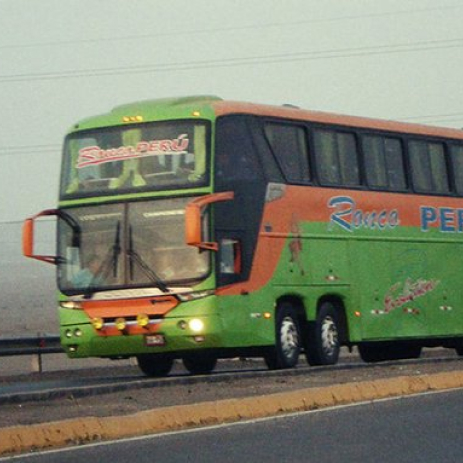
Pros:
Cons:
These companies are aimed mostly towards locals, with customer service only offered in Spanish and terminals located far from hotels & hostels. Quality of bus and service varies widely from local bus companies and it’s one of the instances where you truly get what you pay for. All of them offer direct travel from Puno to La Paz with no free tours or stops along the way. Their overall rating on Tripadvisor, Facebook, and other review sites aren’t usually the best and some are known for having frequent accidents. This option would mostly be recommended for locals or those who are perfectly fluent in Spanish.
| COMPANIES | SCHEDULE | DEPARTURE TIME | DEPARTURE LOCATION | ENGLISH SPEAKING ASSITANCE | TRIPADVISOR RATING |
|---|---|---|---|---|---|
| INKA EXPRESS | DAILY | 06:00, 07:30 and 14:00 | PUBLIC TERMINAL | NO | 89% |
| PERU HOP | DAILY | 08:30 | HOTEL PICK-UP & DROP-OFF | YES | 98% |
| GREEN TOAD | WEEKLY | 14:00 | PUBLIC TERMINAL | NO | N/A |
Allow around 7 to 8 hours via Copacabana, including the border and the Tiquina crossing. The direct Desaguadero route can take 5 to 7 hours, depending on how long the border queue is.
For most travelers, Kasani. It is the main tourist crossing, queues are usually shorter and it takes you through Copacabana. Desaguadero is more direct but busy with freight traffic.
On the Copacabana route, the bus crosses the Strait of Tiquina on a barge while passengers take a small boat. It costs around 2 bolivianos per person and only takes a few minutes.
Yes. Bolivia is one hour ahead of Peru, so your arrival time in La Paz will be an hour later on the clock.
It depends on your nationality, and the rules can change. Check Bolivia’s current entry requirements for your passport before you travel.
Yes. Stop in Copacabana and take a boat to Isla del Sol. You can do a short visit and continue the same evening, but an overnight stay is far more relaxing.
Peru Hop and Bolivia Hop offer high-speed WiFi, and Inka Express also provides high-speed WiFi. Signal can still drop in remote stretches, so download anything important before leaving Puno.
Border hours, entry requirements, schedules and the Tiquina boat fee can change with little notice. The departure times above are also the last ones listed on this page. As a workaround, confirm your departure and route directly with the operator the day before you travel. Also check your nationality’s entry rules for Bolivia, and keep your first evening in La Paz flexible in case the border runs slow.
This article is a part of our series “2025-2026 Travelers in Peru — Advice, Tips, and Honest Experience”. This is a candid, traveler-led series capturing what visitors to Peru in 2025-2026 truly loved (and didn’t), plus practical tips so you can plan smarter, avoid common mistakes, and enjoy your trip to the fullest.