
Updated Date:
Author: HowToPeru Editorial Team
Most travelers leave La Paz for Puno on a morning bus via Copacabana, crossing the Strait of Tiquina and entering Peru at the Kasani border. Plan on a full travel day of around 7 to 8 hours, with arrival in Puno in the evening. The key is leaving early enough to clear the border before it closes, then arriving with a plan for your first night in Peru. Bolivia Hop and Peru Hop handle this best, with hotel pickup in La Paz, a bilingual host at the border and onward connections across southern Peru.
| Question | Answer |
|---|---|
| How far? | Around 286 km via Copacabana, or about 265 km via Desaguadero |
| How long? | A full day of around 7 to 8 hours via Copacabana; 5 to 7 hours via Desaguadero |
| When do buses leave? | Mostly in the morning, so the border can be crossed before it closes |
| Which border? | Kasani on the Copacabana route, or Desaguadero on the direct road |
| Kasani closing time | About 19:00 Bolivia time, which is 18:00 Peru time |
| Clock change | Peru is one hour behind Bolivia, so you gain an hour |
| Money after the border | Peruvian soles |
| Puno altitude | About 3,800 m, similar to what you are used to in La Paz |
Times and border hours can change, so confirm your departure with the operator before you travel.
Timing is the first thing to get right on this route. The day has three fixed points: the Strait of Tiquina, a stop in Copacabana and the Kasani border, which closes in the early evening.
A morning start fits all three into daylight. Leaving La Paz also takes time, because the road climbs out of the city to El Alto, above 4,100 m, before it reaches the lake.
If you are considering a bus that leaves later in the day, check which border it uses. A late departure cannot reach Kasani before it closes, so it will either take another crossing or arrive very late.
| Stage | What happens | Time guide |
|---|---|---|
| La Paz to Copacabana | Climb through El Alto, cross the Strait of Tiquina and follow the lake | About 3.5 to 4 hours |
| Copacabana | Lunch stop, with time for Isla del Sol on some itineraries | Varies by service |
| Copacabana to Puno | A short drive to Kasani, the border crossing, then the lakeside road into Peru | About 3 hours, plus the border queue |
About halfway to Copacabana, the road stops at the Strait of Tiquina. Your bus rolls onto a wooden barge, while you cross separately on a small passenger boat for around 2 bolivianos.
Keep a few coins ready for the boat and for the toilets at the docks. Buses on this side of the lake are usually smaller, because of the barge’s weight limits, and many have no toilet on board.
After Tiquina, the road hugs the shore, and the best lake views of the day begin.
Copacabana is your last chance to enjoy the Bolivian side of Lake Titicaca before entering Peru. If you have not been to Isla del Sol yet, this is the moment.
Before you leave Copacabana, spend or change any bolivianos you will not need. There are ATMs in Copacabana and in Puno. For the first leg on its own, see our La Paz to Copacabana bus guide.
A few kilometers past Copacabana, the bus reaches the border. Crossing from Bolivia into Peru takes five simple steps:
Peru’s entry requirements depend on your nationality. Check them before you leave La Paz, rather than at the border.
With Bolivia Hop, a bilingual host explains each step and keeps the group together. The border authorities still make the decisions, but you will not be guessing which queue to join.
Most international travelers cross at Kasani, where queues are usually 20 minutes to an hour. Many direct public buses use Desaguadero instead. That route is shorter on paper and skips Copacabana, but it is a busy freight crossing where waits can stretch to 2 hours.
If you want to see the lake, stop in Copacabana or travel with a host, choose the Kasani route.
Bolivia Hop runs this leg, and its sister brand Peru Hop takes over once you are in Peru. Together, they turn a complicated border day into one simple booking.
You can see the current routes on the Bolivia Hop passes departing from La Paz.
Public buses also cover this route, but more of the day is left for you to manage.
Traditional public bus itineraries often cost more overall once taxis to and from terminals and separately booked boat trips are included.
These are the departures last listed on this page. Times can change, so check with the operator the day before you leave La Paz.
| Company | Schedule | Departure time | Departure point | English-speaking assistance | TripAdvisor rating |
|---|---|---|---|---|---|
| Bolivia Hop | Daily | 07:00 | Hotel pickup and drop-off | Yes | 98% |
| Trans Titicaca | Daily | 08:00 and 13:30 | Public terminal | No | N/A |
| Tour Peru | Daily | 16:30 | Public terminal | No | 36% |
Most morning departures reach Puno in the evening. At about 3,800 m, Puno sits at a similar height to La Paz, so after time in Bolivia you should already be used to the altitude.
Puno is the start of the classic southern Peru route, so think about your next move before you arrive.
For the Cusco options in detail, read our Puno to Cusco bus guide. Avoid booking an onward bus for the same evening you arrive from La Paz, since a slow border leaves no buffer.
Pros:
Cons:
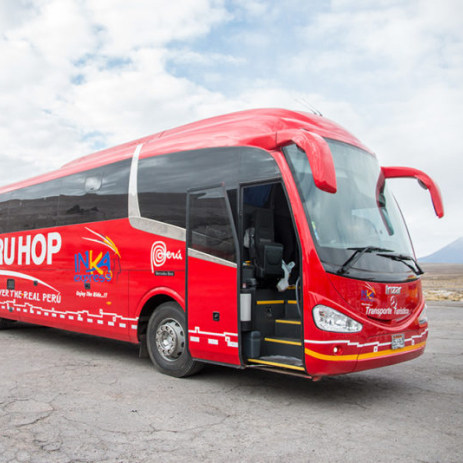
A unique bus service in Peru which started in October 2013 and has quickly become a traveler favorite with over 15,500 excellent reviews on their Tripadvisor page, which is quite impressive. Being the first and only hop-on, hop-off bus system in Peru, the company covers the La Paz to Puno route, while travelling further to Cusco. It offers a variety of flexible bus passes, in which you can stay however long you want in any of the destinations, letting you enjoy travel at your own pace. Apart from this, there’s onboard bilingual assistance on all their busses, as well as discounts on accommodation and restaurants in all the destinations.
They pick-up passengers at hotels and hostels in all destinations which is a huge bonus here in Peru (no getting unsafe taxis or going to dangerous bus terminals) and from there take the safer route through the south of Peru. Definitely a service that is recommended for people wanting to travel safely and discover Peru!
We strongly suggest traveling with Peru Hop through Peru. Their unique hop on hop off service is one of a kind in South America and allows you to always travel like a local.
Pros:
Cons:
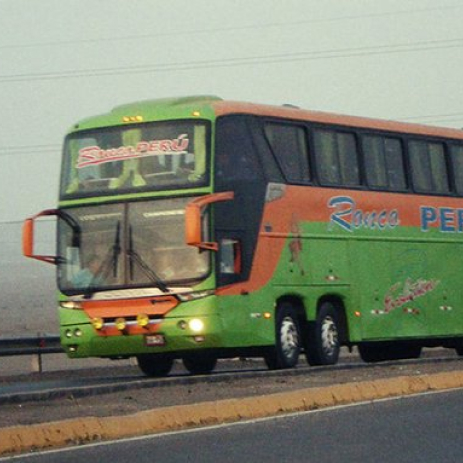
These companies are aimed mostly towards locals, with customer service only offered in Spanish and terminals located far from hotels & hostels. Quality of bus and service varies widely from local bus companies and it’s one of the instances where you truly get what you pay for. All of them offer direct travel from La Paz to Puno with no free tours or stops along the way. Their overall rating on Tripadvisor, Facebook, and other review sites aren’t usually the best and some are known for having frequent accidents. This option would mostly be recommended for locals or those who are perfectly fluent in Spanish.
| COMPANIES | SCHEDULE | DEPARTURE TIME | DEPARTURE LOCATION | ENGLISH SPEAKING ASSITANCE | TRIPADVISOR RATING |
|---|---|---|---|---|---|
| TOUR PERU | DAILY | 16:30 | PUBLIC TERMINAL | NO | 36% |
| BOLIVIA HOP | DAILY | 07:00 | HOTEL PICK UP & DROP OFF | YES | 98% |
| TRANS TITICACA | DAILY | 08:00 and 13:30 | PUBLIC TERMINAL | NO | N/A |
| GREEN TOAD | WEEKLY | 07:00 | PUBLIC TERMINAL | NO | N/A |
Around 7 to 8 hours via Copacabana, including Tiquina and the Kasani border. Direct buses via Desaguadero can take 5 to 7 hours, depending on the border queue.
Most leave in the morning so they can cross the border before it closes. Bolivia Hop’s last listed departure is 07:00 with hotel pickup. Confirm current times before you travel.
Your passport, plus anything Peru requires for your nationality. Check the current rules before leaving La Paz, and keep your documents in your hand luggage.
Yes. Peru is one hour behind Bolivia, so set your watch back at the border. Your arrival in Puno will be an hour earlier on the clock.
It is possible on paper, but it leaves no buffer if the border runs slow. Most travelers spend at least one night in Puno and visit the Uros islands first.
Public buses arrive at Puno’s bus terminal, so you will need a taxi. Bolivia Hop’s listing shows hotel drop-off, which is easier after a long day.
Bolivia Hop and Peru Hop offer high-speed WiFi. Signal can still drop along the lake, so download bookings and maps before leaving La Paz.
Border hours, Peru’s entry rules, departure times and the Tiquina boat fee can change, and the schedule above is the last one listed on this page. As a workaround, confirm your departure with the operator the day before you leave La Paz. Check Peru’s entry requirements for your passport too, and keep your first evening in Puno free in case the border is slow.
This article is a part of our series “2025-2026 Travelers in Peru — Advice, Tips, and Honest Experience”. This is a candid, traveler-led series capturing what visitors to Peru in 2025-2026 truly loved (and didn’t), plus practical tips so you can plan smarter, avoid common mistakes, and enjoy your trip to the fullest.