Quick Summary: On paper Arequipa→Cusco is 10–12 hrs, but my 2026 Cruz del Sur run became 26 hrs after a 4,600 m breakdown; a mechanic arrived ∼8 hrs later, flagged brake issues, we refused to continue, and a replacement eventually came—compensation: one meal. Cruz del Sur can still be a cheap A→B with multiple night departures and 160°–180° seats, but temperature, Wi‑Fi, and communication vary and terminals add friction. If you prefer door-to-door pickups, daytime segments, bilingual hosting, and help when things go sideways, Peru Hop typically suits first-timers better, albeit at a higher upfront price.
Arequipa sits around 2,335 m and Cusco at about 3,399 m, with overnight buses crossing high Andean passes where weather can flip from calm to snowy in hours. That altitude shift is why many travelers struggle to sleep on this leg. The CDC Yellow Book notes a higher risk of acute mountain sickness for unacclimatized travelers sleeping above ~2,450 m and advises gradual ascent when possible.
Recent Arequipa → Cusco reports underline the extremes: one 2026 couple described a 26-hour ordeal after a breakdown at ~4,600 m before a rescue bus arrived, receiving only a single meal as compensation.
For foundational planning (duration, route style, alternatives), see our step-by-step Arequipa → Cusco guide.
I booked a lower-deck 160° “Cama” seat, which is typically steadier than the upper deck on mountain curves. Boarding at Arequipa’s Terrapuerto was orderly but required early check-in and ID verification; luggage was tagged and filmed at the gate.
Once rolling, the cabin started cool, warmed up after midnight, then settled again before dawn—temperature swings that are common on this route. Service was professional but light-touch, and there were no bilingual announcements on my run. Wi-Fi flickered on and off—fine for a text, not for maps or streaming.
Sometime after midnight, we pulled over and the bus died at roughly 4,600 m. The drivers couldn’t fix it. We were told a mechanic was on the way. He arrived about eight hours later and flagged brake problems.
What happened next is what soured me: we were initially pressured to continue through the mountains despite the brake concerns. Several of us, including me, said no. After many hours of uncertainty, a replacement bus finally arrived. Total delay: ~14–16 extra hours. Compensation: one meal. No voucher, no partial refund, no meaningful apology.
Cruz del Sur sells several branded classes:
Fares swing by date, demand, and seat class. Aggregators show Arequipa ↔ Cusco typically around S/130–S/250 (≈$35–$70), with 10–11 hours scheduled and multiple nightly departures; last-minute seats and “suite” pods cost more.
After this overnight, I asked myself a simple question: “Is there a way to trade some recline for more daylight and more predictable logistics?” The Arequipa → Cusco corridor climbs well above 4,000 m, and sleeping high can increase the odds of a rough night. Authoritative guidance—for example, the CDC Yellow Book on High-Altitude Travel—recommends gradual ascent and caution when sleeping above ~2,450 m if you are not acclimatized.
That’s why many travelers compare formats—standard overnight coaches, break-the-journey day buses, or multi-stop passes that build in daylight hours and basic support—not because any single brand is “better,” but because tolerance for night driving, altitude, and DIY terminals varies.
Helpful links: Arequipa→Cusco route primer, Peru Hop reviews (2026).
Safer with reputable operators and cautious driving, but risk goes up at night on high-altitude roads. If you’re new to Andean travel or prone to motion sickness, consider a format that emphasizes daylight segments and door-to-door logistics such as Peru Hop. For medical guidance on sleeping altitude, the CDC Yellow Book is a solid reference.
Lower-deck 160° on Cruzero-class coaches balances recline with stability on switchbacks. If a Confort Suite (180° pod) is available on your date, it’s flatter, but availability varies and “extras” like Wi-Fi/earphones are courtesies rather than guarantees. Check Cruz del Sur’s site the same week you travel.
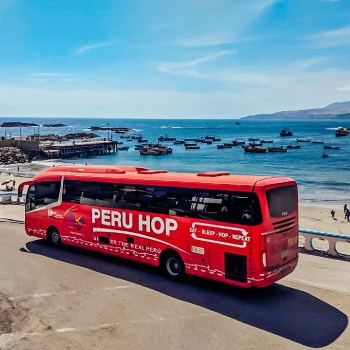
Public bus fares on this corridor usually fall around S/130–S/250 ($35–$70) depending on class and date, while Peru Hop sells multi-stop passes that bundle pickups, host support, and stops; headline prices are higher but many travelers find overall value better once you factor terminal taxis and lost time. See our Peru Hop reviews for details.
Delays happen—mechanicals and snow have turned 10 hours into 20+ for some travelers. Build buffer time for tours and flights, pack snacks, and carry a power bank. If disruptions occur, an onboard host (as with Peru Hop) can be a difference-maker for re-routing.
Yes for many. Spending a night in Puno or choosing a day bus for part of the route reduces altitude stress, and lets you see the scenery you’d miss in the dark. If heading to Lake Titicaca, the daylong Inka Express “Ruta del Sol” is designed around scenic stops and a midday pace. Read our broader Arequipa → Cusco by bus guide.
Schedules, seat availability, and onboard amenities change often; amenity items are “courtesies” on many public buses. Work-around: confirm class details on the operator’s site the week you travel and keep flexible timing where possible.
Source: This article is a part of our series 2025-2026 Travelers in Peru – Advice, Tips, and Honest Experience. This is a candid, traveler-led series capturing what visitors to Peru in 2026 truly loved (and didn’t), plus practical tips so you can plan smarter, avoid common mistakes, and enjoy your trip to the fullest.