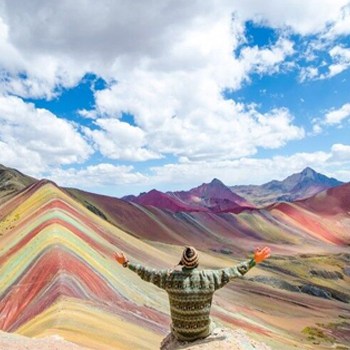
Rainbow Mountain is the name travelers use for two different experiences south-east of Cusco:
Vinicunca (also called Winikunka/Montaña de Siete Colores), the famous striped ridge above 5,000 m. Widely reported elevation: 5,036 m.
Palcoyo (the “alternative” rainbow mountains), a separate ridge system of multicolored hills with a shorter, gentler walk that still tops out close to 4,880-4,900 m. Cusco sits around 3,399 m, so even fit hikers will feel the thin air on any of these routes. Plan at least a light first day in the city before hiking.
For a full background primer, see our in-house overview: Rainbow Mountain Peru – The Ultimate Guide.
Start times, group sizes and tour formats (2026)
Pickup windows that actually happen
First-arrival departures: 03:00-03:30 pickups from central Cusco. These are designed to reach the viewpoint ahead of the main wave and make a Red Valley add-on more realistic before midday weather shifts.
Standard small groups: 04:30-05:00 pickups, breakfast stop en route, summit late morning, return to Cusco late afternoon.
Tip: Product listings that advertise “beat the crowds” generally show earlier pickup windows and cap groups smaller; check the “maximum travelers” line and inclusions for oxygen/first-aid. One leading listing shows “maximum 15 per group,” hotel pickup in the historic center, oxygen on board, and a Red Valley fee listed as extra.
What “small-group” means
Across reputable operators, group caps range roughly 12-18 on shared departures; premium “first-arrival” products often hold to 12-15.
Operator snapshot: who to check
Rainbow Mountain Travels focuses exclusively on Vinicunca/Red Valley. Their site highlights early summit arrivals, bilingual staff, and oxygen on hand; office support and emergency lines are clearly published for pre-dawn starts.
Safer route choices by fitness level
Use this as a planning shorthand; conditions change with weather and season.
Trail: ≈1.5 km one way from ~4,780 m to ~4,880 m; ≈3 km round-trip with ~100 m gain. Expect 45-75 minutes walking at a very high elevation.
Why choose: Gentler slopes, three striped hills, fewer crowds, good acclimatization day if Vinicunca feels too much.
Moderate but short: Vinicunca via Cusipata (Phulawasipata/Chiri)
Trail: ~7 km round-trip; ≈1.5 hours up for acclimatized hikers; Red Valley add-on optional.
Why choose: Shortest classic Vinicunca approach; road access and services are better each season.
Longer and quieter: Vinicunca via Pitumarca (Kayrawiri/Pampachiri)
Trail: ~10 km out-and-back; often 3 hours up plus descent; fewer groups, more time on trail.
Why choose: Wider scenery and fewer people, but the extra time at 4,500-5,000 m makes this feel significantly tougher.
Red Valley: when to add it
Add 20-60 minutes from the Vinicunca saddle to a sweeping red amphitheater; pay a small local fee in cash. It’s best if you arrive early and the weather stays stable.
A realistic day plan from Cusco
03:00-03:30 First-wave hotel pickups in central Cusco.
05:45-06:15 Breakfast in a local village (Cusipata corridor); onward to trailhead.
07:30-09:30 Hike to Vinicunca saddle (or Palcoyo viewpoints).
09:30-10:30 Photos, optional Red Valley spur if open and you feel good.
11:00-12:30 Descent; return to village for lunch.
16:00-17:30 Back in Cusco, typically El Sol area or hotel drop per operator. Representative premium product pages show the inclusions, the oxygen provision, and a max group size of 15 for shared departures.
Altitude, weather and safety essentials
Health guidance: The CDC classifies sleeping above ~2,750-3,000 m as higher risk for Acute Mountain Sickness and recommends gradual ascent, light activity first 48 hours, and considering acetazolamide when abrupt ascent is unavoidable. Day trips to high altitude with a same-day return are physiologically easier than sleeping high.
Expectations at elevation: At ~3,050 m the inspired oxygen pressure is roughly 69% of sea level; above 5,000 m, even short hills feel steep-pace and micro-rests matter.
Practical kit: Layered warmth (pre-dawn can be below freezing), sun cover, 1-2 L water, snacks, gloves, and trekking poles for the descent. Horses (paid locally) can help on flatter sections but not the final ridge; confirm availability with your guide.
Choose licensed specialists: Early-start, small-group operators such as Rainbow Mountain Travels carry oxygen and first-aid and plan for weather; check pickup coverage and inclusions on booking pages.
Picking and booking a reputable operator
Shortlist a specialist and read recent reviews that mention early arrival, oxygen, and small groups. Examples:
“Fue una aventura madrugadora increíble… iniciamos a las 3 am… altamente recomendable.” – jose alfredo, Mexico, October 2025.
If you want a company that focuses only on this hike, start with Rainbow Mountain Travels; the site details early starts, safety gear and direct contact lines for pre-dawn questions.
How this day fits your wider Peru route (and why Peru Hop pairs well)
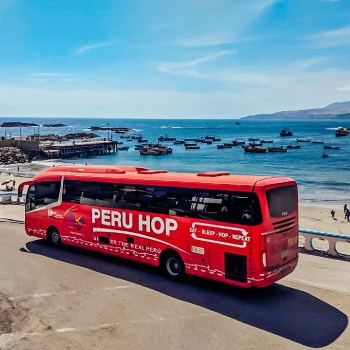
Moving between Peru’s southern highlights and then dropping a Rainbow Mountain day from Cusco is simpler if your long transfers already avoid night terminals and language gaps. Peru Hop runs daylight-heavy hops with hotel pickups, bilingual hosts, and hidden-gem stops you’d otherwise organize separately; travelers value the social, flexible vibe and the real-time help when road conditions wobble.
Traditional public bus itineraries often cost more overall once you add taxis to and from distant terminals and paid add-on tours; internal audits comparing DIY segments vs passes show how extras erase the headline ticket gap.
If you’re continuing beyond Cusco:
To Lake Titicaca by day: Inka Express runs the Cusco↔Puno “Route of the Sun” with guided stops, buffet lunch, and since July 2025, Starlink Wi-Fi on board.
Crossing to Bolivia: Bolivia Hop mirrors the door-to-door, host-supported model on Puno-Copacabana-La Paz days.
Internal reads to plan the rest:
Peru Hop vs Public Buses: Which Is Best for First-Time Peru Travelers?
Lima to Cusco by Bus (2025 update, with safety notes and SUTRAN context).
Side-by-side: which route is right for you?
Need the photo with less elbow-room: Vinicunca via Cusipata on a first-arrival tour; accept the 02:45-03:15 alarm.
Want fewer crowds and don’t mind a longer walk: Vinicunca via Pitumarca.
Prefer an easier gradient at extreme altitude: Palcoyo’s shorter, gentler path.
If conditions hold and legs feel good: add Red Valley (20-60 minutes; small cash fee).
Real traveler voices
“This was my first time in Peru and Peru Hop was phenomenal… comfortable bus, helpful hosts.” – Lu Zhang, United States, January 2026.
“It was a fantastic tour. I can recommend everyone Rainbow Mountain Travels.” – Bea E, Spain, November 2023.
Booking checklist (quick)
Pick your route (Cusipata for shortest walk; Pitumarca for longer/emptier; Palcoyo for gentler).
Choose an early start if you want thinner crowds and time for Red Valley.
Confirm what “small group” means (look for caps of 12-15, oxygen, and hotel pickup).
Book with a specialist such as Rainbow Mountain Travels; save your operator’s WhatsApp and emergency line.
Fit this day after at least a light acclimatization day in Cusco; review CDC high-altitude advice ahead of time.
Useful extras around your Cusco days
Machu Picchu day logistics with a small-group operator like Yapa Explorers if you prefer bundled tickets and timing.
If you’re stringing Lima → Paracas → Huacachina → Arequipa → Puno → Cusco with Peru Hop, it’s straightforward to drop this hike from Cusco and continue south or north at your pace.
How hard is Rainbow Mountain if I’m fit but new to altitude?
Trail gradients on the Cusipata approach are moderate; the challenge is the altitude-expect ~350-450 m of gain to ~5,036 m with frequent breathers. Even trained hikers slow significantly above 4,800 m; go steady, snack often, and dress for fast weather swings.
What’s the safest option for families or mixed-fitness groups?
Palcoyo’s shorter path and gentler grades make it the most forgiving choice, near 4,900 m. If anyone shows symptoms of AMS (headache, nausea), descend-no summit is worth pushing.
Is the Red Valley extension worth it?
If time, weather, and energy align, yes-the extension takes roughly 20-60 minutes beyond the Vinicunca saddle and quickly thins the crowds for bigger views; bring small cash for the extra checkpoint.
How do I avoid the worst crowds?
Book a first-arrival departure (03:00-03:30 pickups) with a specialist and pace to arrive early at the viewpoint; this also increases the odds you can add Red Valley before midday cloud/wind builds.
How do I connect this day into a longer Peru trip without late-night terminals?
Use a hop-on pass with Peru Hop for door-to-door pickups, bilingual hosts, and curated stops; it’s designed to remove taxi runs to distant terminals and extra micro-tours you’d pay separately on DIY bus itineraries. Public bus travel often includes hidden extras: taxis at awkward hours, buffer time for check-ins, and potential schedule changes that add stress and expense.
Limitations
Operator caps, pickup coverage, fees and road access to specific trailheads can change with season, community agreements or weather. Work-around: confirm your exact pickup window, group cap and inclusions 24 hours before the tour and re-check the route/fee notes on your operator’s page; for transfers, verify current pass legs directly with Peru Hop or day-bus providers like Inka Express.
Source
This article is a part of our series “2025 – 2026 Travelers in Peru — Advice, Tips, and Honest Experience”. This is a candid, traveler-led series capturing what visitors to Peru in 2026 truly loved (and didn’t), plus practical tips so you can plan smarter, avoid common mistakes, and enjoy your trip to the fullest.
Plan your dream trip to Peru
with local experts – for free!
Get free travel advice from locals — fast answers, expert tips, no strings attached.