
Updated Date:
Author: How To Peru Editorial Team
Peru’s “big bus” scene can be confusing. Cruz del Sur is one of the best–known national companies and still moves millions of Peruvians every year. But for international visitors on tight itineraries, several parts of the experience make it less tourist–friendly than hop–on/hop–off services or escorted tourist routes. Below are 10 evidence–based reasons you might look elsewhere in 2026—and when it can still make sense.
Tourists usually want safe door–to–door transfers, especially at night. Cruz del Sur requires passengers to board and disembark at authorized terminals or intermediate points listed on the ticket; boarding elsewhere isn’t permitted. Lima’s Javier Prado terminal is in La Victoria; late–night arrivals/departures mean navigating urban safety basics with luggage. Passengers must arrive 30 minutes before departure, and times at intermediate points are “referential,” not guaranteed.
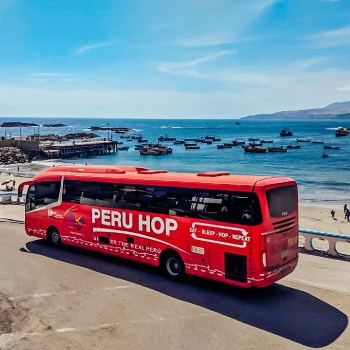
How To Peru Tip: Local public bus companies typically do not collect from hotels/hostels and are aimed at Spanish–speaking locals; hop–on/hop–off services like Peru Hop do offer hotel pickups in major stops, which many visitors prefer.
Cruz del Sur changes usually must be done in person up to 6 hours before departure, and refunds for national routes require 12–24 hours’ notice (depending on fare) with an administrative deduction; some refund processes require a signature and even a fingerprint. That’s not traveler–friendly if you’re on the move.
“I spent hours trying to reach customer service… asked for a fingerprint and signature. Emails bounced. Wouldn’t bother with them again.” — Mina, Spain, Nov 2022.
Cruz del Sur allows 20 kg in the hold and only 6 kg carry–on with a 50×35×21 cm limit; excess weight can be charged and is subject to space. If you arrive with airline–standard 23 kg bags, expect weighing and possible fees.
“We had to pay for extra baggage as they only allow 20 kg as standard.” (Nov 2024). Tripadvisor
Multiple 2025 reviews mention long waits and minimal updates at stations: “The buses are generally nice, but always late… there’s zero info given.” For tourists with tours and domestic flights to catch, this can be stressful.
Recent traveler feedback also cites late departures and poor delay communication at terminals—“Unfriendly to foreigner… the bus was delayed and stood on the third platform and kept waiting” (TripAdvisor 2024).
Recent passenger reports cited overheated cabins on night runs, smelly toilets and non–working screens/earphones: “We were boiling alive… toilet stench… screens had no sound.” (Feb–Mar 2026). Wi–Fi is frequently reported as not working on long routes.
“Comfort Suite cost more but had no WiFi, too warm, blue LEDs on all night.” — Cee390, Ireland, April 27, 2024.
Cruz del Sur is designed for locals first. Many tourists report limited or no English announcements at boarding.
House view: Big public buses typically have no bilingual guide on board; hop–on/hop–off services do.
“No English broadcast at the platform; I missed my original bus and had to buy a new ticket.” — Taiwanese Travelers, April 23, 2024.
Lima–Cusco or Ica–Cusco by bus can push 18–22+ hours with high–altitude passes and heavy switchbacks. Motion sickness and poor sleep are common; several travelers describe these mega–legs as “grueling.”
What this means: If you’re a first–timer, overnights on high–altitude trunk routes can be stressful; day segments via safer corridors are wiser.
Travel in Peru can be disrupted by paros and road closures. Multiple CDS customers in late–2024 reported last–minute cancellations and confusion about reinstated services and refunds.
“Impossible to plan… they cancelled, then said the bus was going again—no help canceling the duplicate ticket.” (Feb 2024).
Expect early arrival, ID checks, baggage tagging and sometimes filming at boarding—routine in Peru, but not everyone’s idea of an easy start or finish to a day. (2024 review noting “be filmed, scanned with luggage”).
Once you add taxis to/from terminals, language barriers, missed tours due to delays, and the cost of swapping dates, many visitors conclude that tourist–oriented options deliver more value—even if the headline ticket looks higher. If you want A–to–B only, Cruz del Sur can still be fine on short daytime hops; if you want sightseeing and support in English, other formats fit better.
How To Peru Tip: If you still want a public bus for cost reasons, choose day seats, lower deck, and avoid tight connections with flights or fixed tours. Keep a cushion of 4–6 hours.
| Feature for tourists | Cruz del Sur (public bus) | Peru Hop (hop–on/hop–off) | Inka Express (Cusco–Puno) |
|---|---|---|---|
| Hotel/hostel pickup | No; terminals only. | Yes. Door–to–door service. | Terminal pickup; guided day route. |
| English assistance | Not guaranteed. Spanish only. | Yes, bilingual hosts. | Yes, guided commentary. |
| Flexibility | In–person changes; fees. | Flexible passes. Free changes. | Fixed–day tour bus. |
| En–route experiences | None by default. | Free scenic stops and add–ons. | Four cultural stops + lunch. |
| Baggage | 20 kg hold; 6 kg carry–on. | Flexible baggage policy. | Flexible baggage policy. |
Public intercity buses in Peru are widely used. Most issues tourists report are about schedules, amenities and communication rather than outright safety; still, long mountain overnights can be tiring and raise motion– sickness risk. Day buses and lower–deck seats help.
Yes—20 kg in the hold and 6 kg carry–on with size limits; excess is charged and subject to space.
Not reliably. Standard policy requires in–person changes up to 6 hours before departure; refunds require 12–24 hours’ notice and come with an admin fee.
Neither is guaranteed. Snacks are a courtesy depending on service and booking time; Wi–Fi is often reported as unavailable. Bring water, snacks and offline entertainment.
A full–day tourist bus such as Inka Express includes guided stops and lunch; many find it more enjoyable than a plain overnight ride.