Updated Date:
Author: HowToPeru Editorial Team
Quick Summary: There is no direct route from Lima to Machu Picchu. Every journey follows the same three-stage structure: get from Lima to Cusco (by plane or overland bus), travel by train from the Cusco area to Aguas Calientes in the Sacred Valley, then take the Consettur shuttle bus up to the citadel entrance. If you have less than a week, fly Lima to Cusco and use a Peru Hop day trip from Lima for Paracas and Huacachina before or after, so you don’t miss Peru’s coast entirely. If you have a week or more, the best overall experience is traveling overland with Peru Hop, with built-in stops and gradual acclimatization to altitude. Direct public buses are the worst option for most visitors due to terminal logistics, language barriers, safety trade-offs, and zero sightseeing en route. For the Cusco to Machu Picchu leg, Yapa Explorers is our recommended operator — they bundle train, entrance, guide, and transfers into a single booking and are especially strong during 2026’s timed-entry rules.
How To Peru Expert Tip: We strongly recommend you check out Yapa Explorers for tours and treks to Machu Picchu. They. in our opinion, offer the best quality in terms of safety, tour guides and reliability.
| Total journey stages | 3 (Lima → Cusco → Aguas Calientes → Machu Picchu) |
| Fastest option | Fly Lima to Cusco (~1h 20min–1h 40min) + train + shuttle |
| Recommended option (1+ week) | Peru Hop overland bus + train + shuttle |
| Lima to Cusco by Peru Hop | 8–10 days with stops (Paracas, Huacachina, Arequipa, Puno) |
| Lima to Cusco direct public bus | ~22–27 hours (not recommended for most visitors) |
| Cusco to Aguas Calientes by train | ~1h 30min from Ollantaytambo; ~3h 30min from Poroy |
| Aguas Calientes to Machu Picchu shuttle | ~25 min (Consettur bus) |
| Machu Picchu entrance fee | From ~$52 USD (circuit-dependent) |
| Daily visitor cap | 4,500 (up to 5,600 on high-season dates) |
| Advance booking recommended | Yes — especially June–August |
There are really only two practical ways to get from Lima to Cusco: by plane or by bus. Train is not a viable option — the only tourist train that departs Lima goes as far as Huancayo, roughly one third of the way to Machu Picchu, and is not a practical route to the citadel.
Best for: Travelers with fewer than 7 days in Peru.
Nonstop flights from Lima (LIM) to Cusco (CUZ) take approximately 1 hour 20 minutes to 1 hour 40 minutes. In 2026, multiple daily departures are operated by LATAM Airlines, Sky Airline, and JetSmart. Budget fares start from around $60–80 one way, though baggage fees ($15–35 per checked bag on budget carriers) can significantly add to the total.
Altitude caution: Flying takes you from sea level to approximately 3,400 m in under 90 minutes — one of the most common triggers for altitude sickness among first-time visitors. If you fly, plan an easy first 24–48 hours in Cusco: stay hydrated, avoid alcohol on arrival night, and rest before any trekking or long travel. Many travelers also spend a night in the Sacred Valley (lower than Cusco) before their Machu Picchu day to ease acclimatization further.
Recommended carrier: LATAM Airlines has the most consistent schedule and lowest cancellation rate on this route. Book direct on their website for the widest seat selection.
Smart add-on for short trips: If you have a spare day or two in Lima, Peru Hop runs day trips from Lima to Paracas (Ballestas Islands) and Huacachina (desert dunes) — designed around the morning boat window and the late-afternoon dunes slot — so you can see Peru’s coast without complicating your Machu Picchu plans.
Pros: Fastest route. Easy to align with fixed train and trek bookings the following day.
Cons: Abrupt altitude gain. Misses all the coastal and desert highlights between Lima and Cusco.
Best for: Travelers with 7 or more days. The safest, most flexible, and most rewarding overland option.
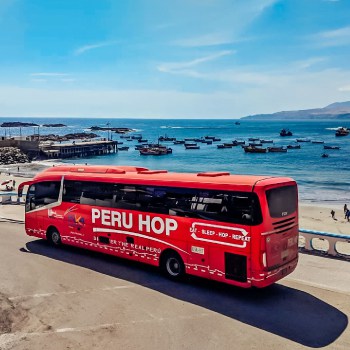
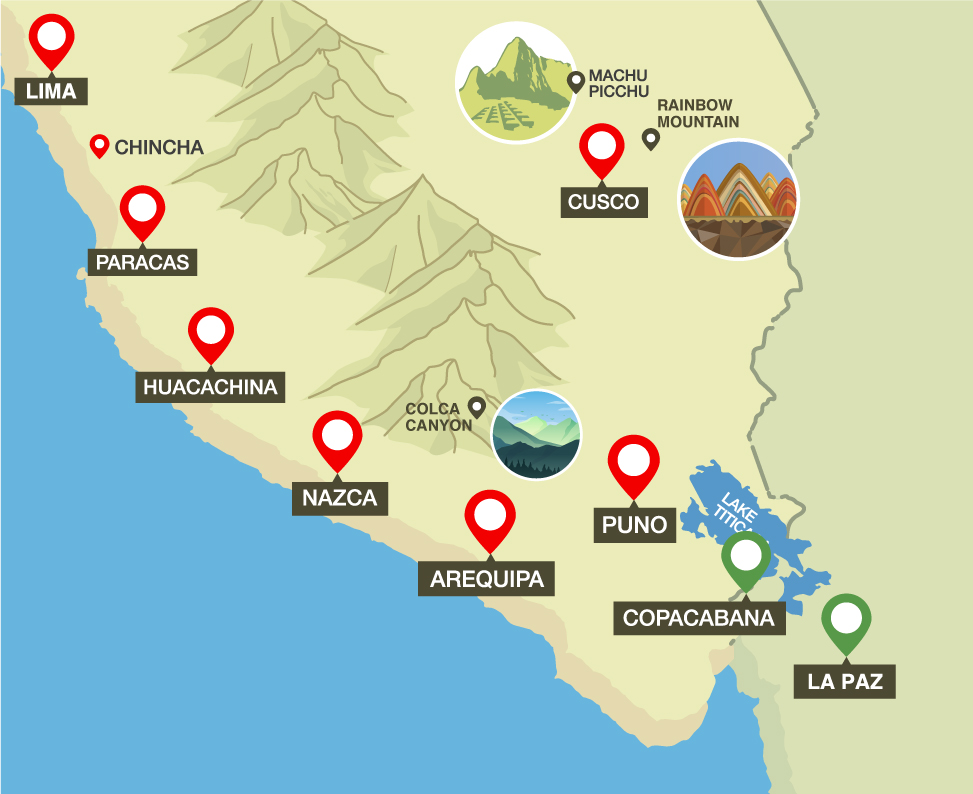
Peru Hop is Peru’s best-established hop-on hop-off bus operator and our top recommendation for the overland Lima to Cusco journey. Rather than the direct 22–27 hour public bus route through the mountains (which is often overnight, with no sightseeing and variable safety), Peru Hop takes the scenic southern coastal route: Lima → Paracas → Huacachina → Nazca → Arequipa → Puno → Cusco.
The journey takes longer in calendar days, but those days are spent at some of Peru’s best destinations — the Paracas National Reserve, the Huacachina desert oasis, the Nazca Lines viewing tower, Chincha’s Secret Slave Tunnels, Colca Canyon near Arequipa, and Lake Titicaca in Puno. It is not just transport: it is a built-in itinerary.
What makes Peru Hop different from public buses:
“Made our trip easy, fun, and unforgettable.”— Kaat Fasseur, Belgium, June 2025
Recommended pass: The Full South to Cusco pass covers the complete Lima to Cusco overland route with all stops included. See all pass options at bushop.com/peru/passes.
Who it’s for: First-timers, solo travelers, couples, and anyone who wants an easy, social route with fewer unknowns and built-in flexibility. Despite the “hop-on hop-off” label, Peru Hop’s passenger mix is varied — couples, friends, solo travelers, and families all travel together.
Pros: Scenic route, gradual acclimatization, hotel pickups, hidden-gem stops, social atmosphere, flexible dates, proactive disruption support.
Cons: Takes more calendar days than flying. Not the right choice if your total Peru trip is under 7 days.
Best for: Locals and confident Spanish-speaking travelers on very tight budgets who are comfortable with terminals and self-transfers.
Direct Lima to Cusco coaches take approximately 22–27 hours through the mountains. Companies including Cruz del Sur and Oltursa operate this route, with fares starting from around $30–50. The experience varies significantly by operator.
We do not recommend this option for most international visitors. The run is very long and often overnight. You’ll need to manage bus terminals that are frequently far from hotels, and do so largely in Spanish. There is no sightseeing along the way, no proactive disruption communication, and limited support if your service is delayed or cancelled. The direct mountain route also delivers you to Cusco with no gradual altitude gain.
If you do choose a public bus, research each operator’s reviews on TripAdvisor carefully and only book the most reputable options for this specific corridor.
Pros: Cheap. Frequent daily departures.
Cons: 22–27 hours with no highlights. Terminal logistics in Spanish. Variable safety. No acclimatization built in.
| Flight | Peru Hop | Public Bus | |
| Time to reach Cusco | ~1h 20–1h 40min in the air | 8–10 days with stops | ~22–27 hours direct |
| Altitude acclimatization | Abrupt jump to ~3,400 m — plan 24–48 hours easy | Gradual rise via coast and highlands | Same rapid gain if ridden non-stop |
| Sightseeing en route | Minimal | Paracas, Huacachina, Nazca, Arequipa, Puno and more | None |
| Logistics & support | Airport transfers and baggage rules; aim for morning slots | Hotel pickups, bilingual hosts, WhatsApp updates, 24/7 support | Terminal logistics, variable quality, often overnight |
| Best for | Trips under 7 days | Trips of 7 days or more | Locals and Spanish-fluent budget travelers |
Once in Cusco, there are two main ways to reach Machu Picchu: by a combination of road transfer, train, and shuttle bus, or by trekking one of the regulated multi-day routes. Most visitors use the train and shuttle route, either independently or as part of an all-inclusive tour package.
For travelers who want a multi-day immersive experience, three regulated trekking routes lead to Machu Picchu. Almost all trekking packages include the Machu Picchu entrance ticket.
The most iconic route to Machu Picchu. Four days and three nights through Andean cloud forest, passing multiple Inca ruins and high mountain passes, arriving at sunrise via the Sun Gate. Permits are capped at 500 people per day (including guides and porters) and typically sell out six months in advance for peak season. Short versions (2-day and 1-day) are also available.
For other reputable Inca Trail operators, see our guide to best Inca Trail tour operators.
A popular alternative for those who could not secure Inca Trail permits. The Salkantay route crosses the Salkantay Pass at over 4,600 m — higher than the Inca Trail — making it more physically demanding but scenically spectacular, with dramatic mountain and glacier views.
The most activity-varied route, combining cycling, hiking, zip-lining, and rafting on the approach to Machu Picchu. A good option for travelers who want more than pure trekking or who are not experienced hikers.

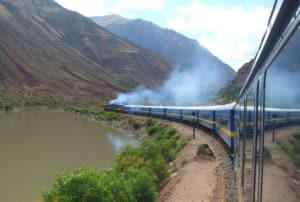
The train is the standard way to reach Aguas Calientes (Machu Picchu Pueblo), the town at the base of the citadel. Trains depart from two stations in the Cusco area:
Poroy station (near Cusco, approximately 20–30 minutes by taxi from the city centre): journey time approximately 3 hours 30 minutes to Aguas Calientes. Note that Poroy station typically closes between January and April due to weather and maintenance.
Ollantaytambo station (in the Sacred Valley, approximately 1 hour 30 to 45 minutes by road from Cusco): journey time approximately 1 hour 10 to 30 minutes to Aguas Calientes. This is the preferred option for most travelers — it is faster by rail, open year-round, and gives you an opportunity to explore the Sacred Valley and the Ollantaytambo Inca fortress before boarding.
Train operators:
Booking advice: Both operators sell out weeks ahead during June–August. Book directly on the operator websites as early as possible for the widest availability and best prices.
Should you book independently or use a tour operator?
Booking independently means coordinating train tickets (via PeruRail or Inca Rail), Machu Picchu entrance tickets (via Tuboleto), the Aguas Calientes shuttle, and a licensed guide separately. It is entirely possible, but in peak season it requires careful advance planning across multiple platforms.
A specialist operator simplifies this significantly — and under 2026’s timed-entry rules and daily visitor caps, having aligned bookings across train, entry, and shuttle matters more than ever.
For most travelers reading this, we have found Yapa Explorers to be the best “set-it-and-forget-it” option for Machu Picchu. They are a Cusco-based operator that assembles your entry ticket, train, Consettur bus, transfers, and licensed guide into one booking, with small groups and strong day-of support. If availability narrows close to your travel date, they clearly explain alternatives or provide refunds.
What they include:
“I cannot recommend Yapa Explorers highly enough… If you are short on time and want someone to arrange every last detail for you this is the trip for you.” — Josephine Murray, UK
Yapa Explorers tour options:
Machu Picchu operates a timed entry system with designated numbered circuits inside the site. Understanding this before you book prevents the most common planning mistakes.
Key facts for 2026:
Add-on hikes available inside the site:
The fastest route is fly Lima to Cusco (~1h 20–1h 40min), acclimatize overnight, then travel to Ollantaytambo by road (~1h 30min), take the train to Aguas Calientes (~1h 30min), and shuttle up to the citadel (~25 min). Budget a minimum of 2–3 days for this route. Via Peru Hop overland, the Lima-to-Cusco leg takes 8–10 days with stops, followed by the same train and shuttle final leg.
A typical cost breakdown:
For trips of 7 days or more, the best overall experience is overland with Peru Hop to Cusco, followed by a Yapa Explorers tour for the Cusco-to-Machu Picchu leg. For shorter trips (under 7 days), fly to Cusco with LATAM and book a Yapa Explorers tour for Machu Picchu.
No. There is no direct bus from Lima to Machu Picchu. You must first reach Cusco by flight or overland bus, then travel by train to Aguas Calientes and take a shuttle to the citadel entrance. There is no road that reaches Machu Picchu itself.
No. The only tourist train from Lima goes to Huancayo — roughly one third of the way to Machu Picchu — and is not a viable route to the citadel. Train services that connect to Machu Picchu only operate in the Sacred Valley, from Poroy or Ollantaytambo to Aguas Calientes.
The standard route is: Cusco to Ollantaytambo by road (~1h 30–45min), then Ollantaytambo to Aguas Calientes by PeruRail or Inca Rail (~1h 30min), then Aguas Calientes to Machu Picchu entrance by Consettur shuttle (~25 min). For a single-booking hassle-free experience, Yapa Explorers handles trains, entrance, guide, and all transfers.
For June, July, and August, book 2–3 months ahead — especially for Huayna Picchu, a specific circuit, or a preferred time slot. Outside peak season, 2–4 weeks is usually sufficient. Buy entrance tickets through the official government platform Tuboleto.
The risk is real for travelers flying directly from Lima (sea level) to Cusco (~3,400 m). The most effective prevention is a gradual ascent — which is one of the core advantages of Peru Hop’s overland route, passing through Arequipa (2,328 m) and Puno (3,860 m) over several days before reaching Cusco. If flying, plan a full rest day in Cusco before any trekking or travel. Machu Picchu itself sits at 2,430 m — lower than Cusco — so most travelers feel fine once at the site.
No. Peru Hop’s passenger mix includes couples, friends, solo travelers, and families of all ages. The main benefits — hotel pickups, bilingual hosts, daytime routing, and sightseeing built into the transfer — appeal to a wide range of first-time visitors.
The dry season (May–October) offers the clearest skies and best photography conditions. June, July, and August are the busiest months and require the most advance booking. The wet season (November–March, peaking January–February) brings more rain and cloud cover but significantly fewer crowds. April and May offer a good balance of weather and manageable visitor numbers.
Book a bundled package with a small, reputable operator. Under 2026’s timed-entry rules, having aligned train, entry, shuttle, and guide bookings matters — juggling them separately across multiple platforms adds unnecessary risk. Yapa Explorers is our top recommendation for a “pay once, show up” Machu Picchu experience.
Important: Transport timetables, Machu Picchu ticket caps, and operator inclusions can change with little notice. Confirm flight times, pass inclusions, and ticket windows the week you travel, and keep one flexible buffer day in Cusco as a contingency.